
About Goal Time
Goal Time builds self-determination by teaching people to set goals, make plans, take action, and learn from their experiences.
Goal Time is a family of evidence-based self-determination instructional practices designed for different learners and implementation settings. Learners use a structured, repeatable process to pursue goals that matter to them while developing the skills and abilities needed to become more self-determined.
Core Components of Goal Time
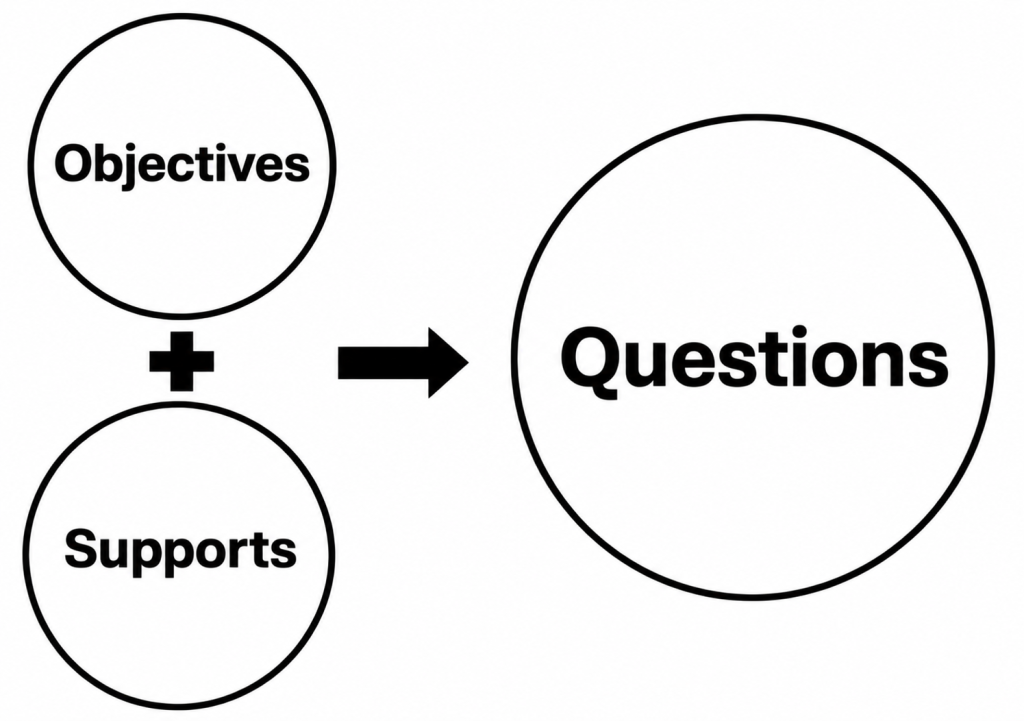
All Goal Time products use the same three core components, shown above, which work together to guide learners as they set goals, develop action plans, and evaluate their progress. Questions guide learners to think through the Goal Time process; Objectives provide a roadmap for implementers to support learners in answering each question; and Supports provide additional strategies and resources that can support individualizing learning. These core components function the same way across Goal Time products but are named differently to reflect the learners, implementers, and settings for each product.
Three-Phase Instructional Process

Learners move through three phases—Set a Goal, Take Action, and Adjust Goal or Plan—that guide them through the process of pursuing a goal.

Learner-Directed Goals
Learners identify and work toward goals that are meaningful to them. Goals can focus on academics, personal priorities, transition to adulthood, employment, or community life.

Explicit Instruction & Practice
Trained facilitators use Goal Time’s lesson plans to meet Objectives and individualize instruction through the use of individualized Supports to teach the skills and abilities learners need to become more self-determined.

12 Guiding Questions
Twelve Questions provide a consistent roadmap across the three phases, helping learners decide what they want to achieve, develop and carry out a plan, monitor progress, and reflect on what they learn.

Repeated Use Across Goals
Learners can use the Goal Time process repeatedly over time to pursue different goals and strengthen their self-determination.
Find the Goal Time That’s Right for You
Goal Time practices package evidence-based self-determination instruction for different learners and settings. Choose the practice that best fits the people you support and where you work.



Your Roadmap to Goal Time:

Learn about Goal Time, the evidence behind it, and which Goal Time practice best fits your learners and setting. Consider your goals, learners, setting, implementation team, and the supports needed to introduce Goal Time successfully.

Complete Goal Time professional learning to understand the practice and prepare to use it with learners. Start your online, self-paced training now, or inquire about live group trainings offered in-person or online.


3. Implement
Begin using Goal Time with implementation materials, tools, data supports, coaching, and technical assistance.

4. Improve & Sustain
Use data, reflection, coaching, and continuous improvement to strengthen implementation and sustain Goal Time over time.
Backed by research. Supported by the SDLC.
Goal Time is built on decades of research on self-determination and self-determined learning. The Self-Determination Learning Center (SDLC), housed at the KU Center on Disabilities at the University of Kansas, provides professional learning, coaching, technical assistance, tools, and resources to help organizations implement Goal Time with quality and sustain it over time.